

Overview
The Logs page provides detailed information about every API request made to Resend, helping you monitor activity and troubleshoot issues quickly.Viewing logs
Access your logs from the Logs page in the dashboard.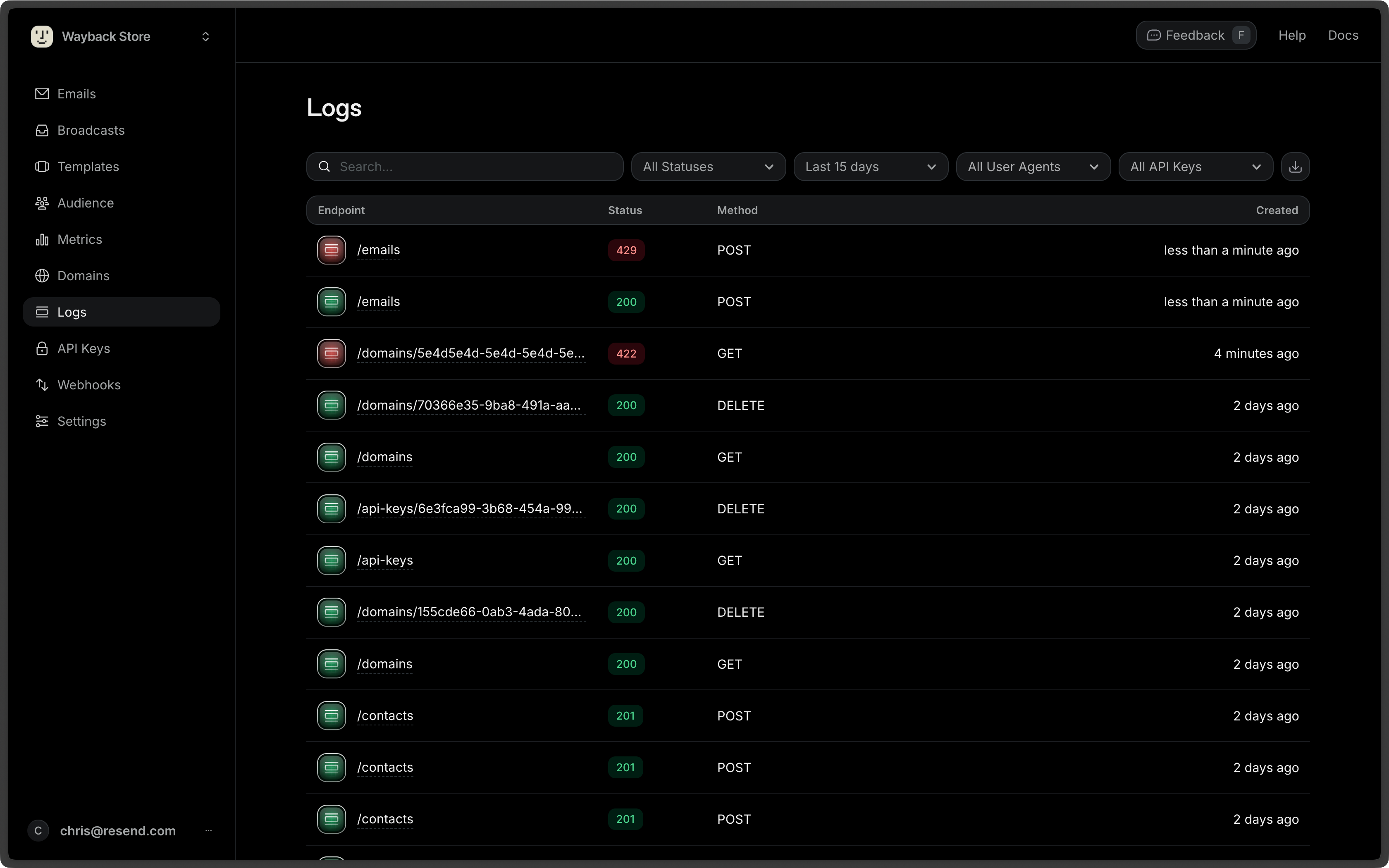
- Endpoint - The API endpoint called (e.g.,
/domains,/api-keys,/contacts) - Status - The HTTP response status code (200, 201, etc.)
- Method - The HTTP method used (GET, POST, DELETE, etc.)
- Created - When the request was made (displayed as relative time)
Searching Logs
Use the search bar to find specific logs. This is useful when tracking down a particular request or debugging an issue.Filtering Logs
Filter logs by response status to quickly identify issues:- All Statuses - View all logs
- Successes - Show only successful requests (2xx status codes)
- Errors - Show only failed requests (4xx and 5xx status codes)
- Specific codes - Select one or more specific HTTP status codes (200, 201, 403, 429, etc.)
- Date range - Adjust the time period for logs (e.g., Last 15 days)
- User Agents - Filter by SDK or client
- API Keys - Filter by specific API key
Log details
Click any log entry to view complete details.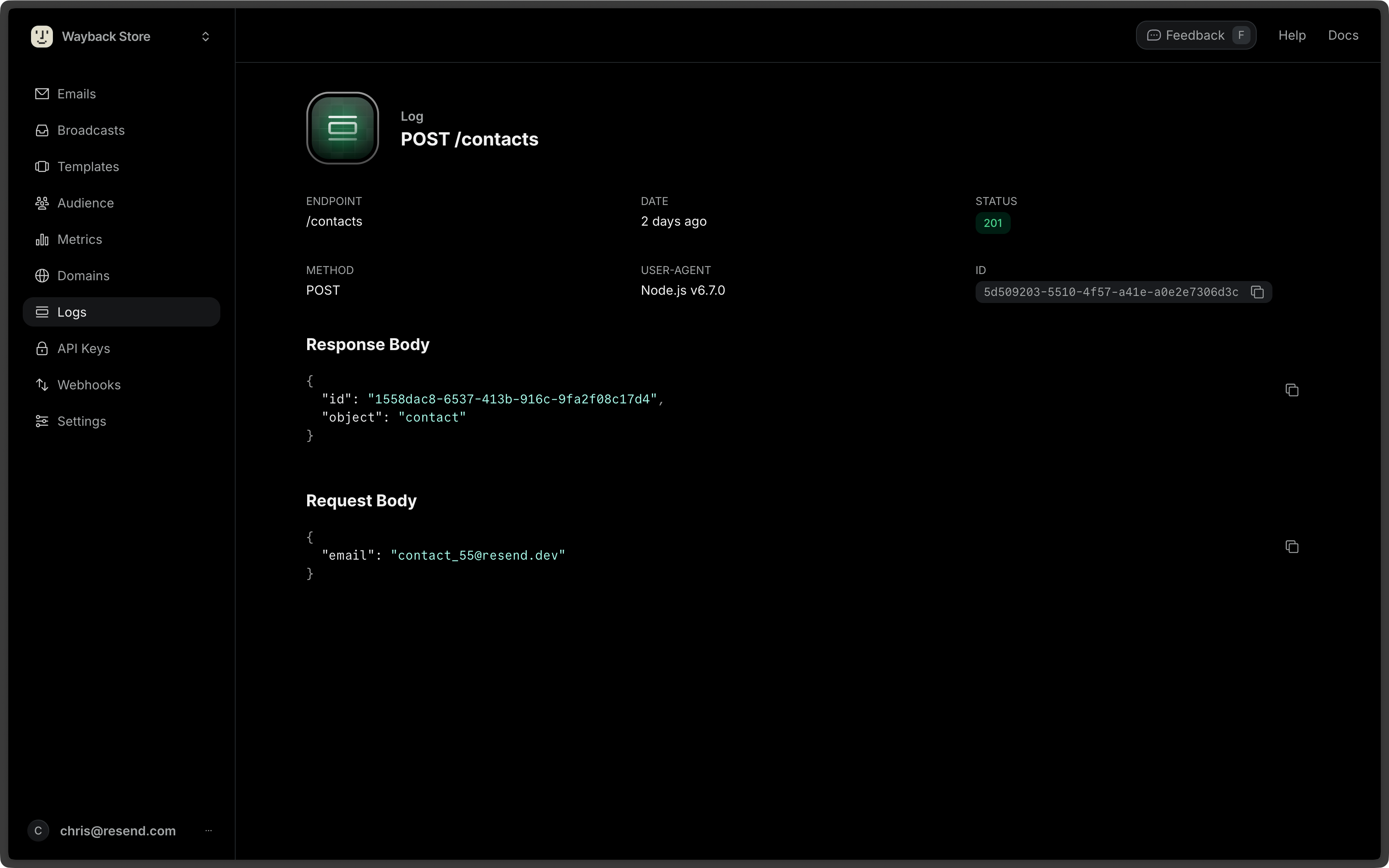
Request information
- Request body - The full JSON payload sent to the API (with copyable code blocks)
- HTTP method - GET, POST, etc.
- Endpoint - The API endpoint called
- User-Agent - The client or SDK used, with automatic SDK detection showing name and version
Response information
- Response body - The complete API response (with copyable code blocks)
- Status code - The HTTP status code returned
- Timestamp - When the request was processed
SDK detection
The dashboard automatically detects and displays Resend SDK information from the User-Agent header, showing:- SDK name (e.g., “Resend Node.js”)
- Version number
Troubleshooting errors
For supported error types, click the Help me fix button to open a troubleshooting drawer.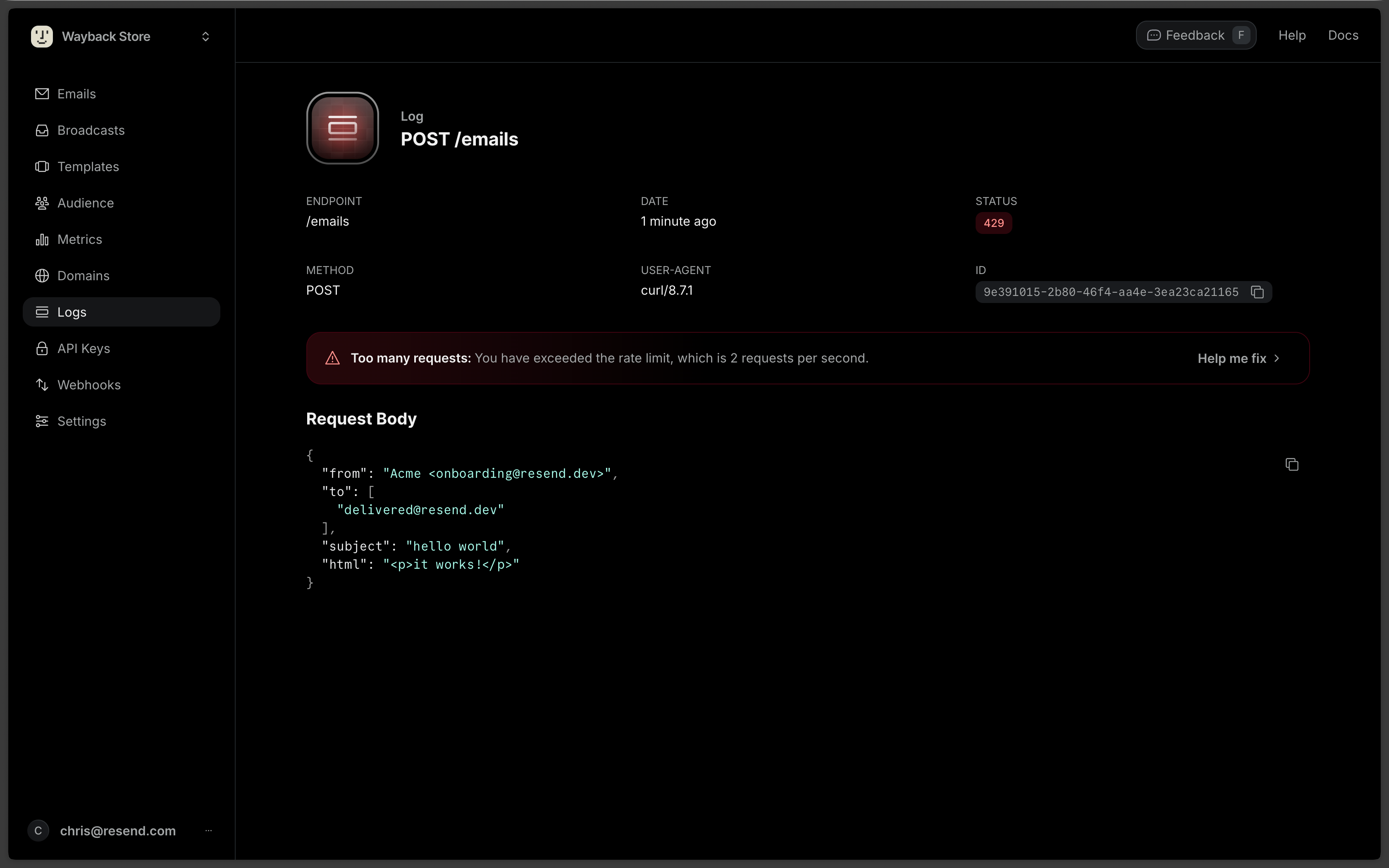
- Raw response - The complete API response
- Detailed guidance - Step-by-step instructions to resolve the issue
- Relevant links - Documentation and knowledge base articles
- Contextual information - Your current rate limits, verified domains, and other relevant data
View a comprehensive list of error codes and their meanings in the Resend API
Reference.
Export your data
Admins can download your data in CSV format for the following resources:- Emails
- Broadcasts
- Contacts
- Segments
- Domains
- Logs
- API keys
Currently, exports are limited to admin users of your team.
All exports your team creates are listed in the
Exports page under Settings > Team >
Exports. Select any export to view its details page. All members of your
team can view your exports, but only admins can download the data.